
Hang tag design basics for garment export programmes
A hang tag is the first printed thing a shopper touches on a garment — and one of the last accessories confirmed before a shipment leaves Bangladesh. This guide covers the basics export programmes most often get wrong: size, board, copy, sustainability labelling and attachment, so your tags pass buyer QC the first time.
What job does a hang tag do on an export programme?
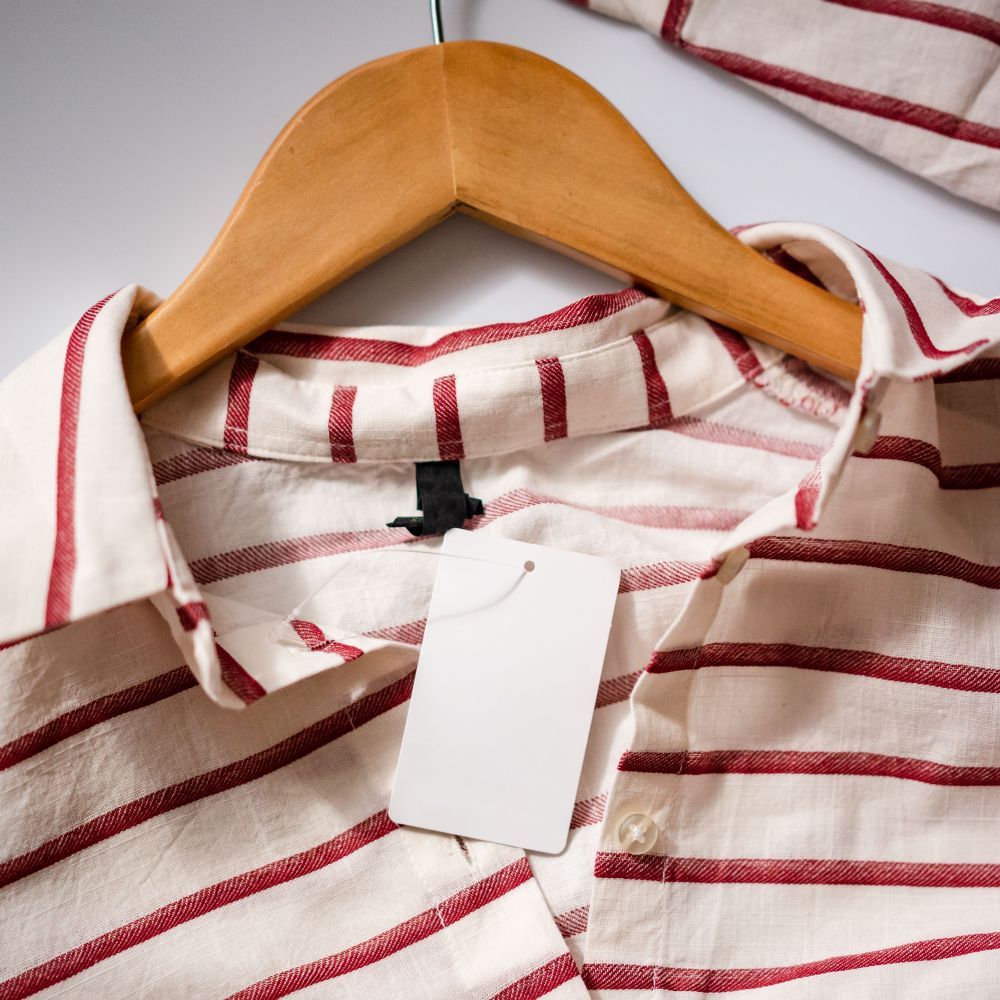
A hang tag is a removable printed label attached to a garment that carries brand identity and product information to the point of sale. On an export programme it does a second, quieter job: it is a controlled document. The style number, size, colour code and price field on the tag must agree with the buyer's purchase order, the care label and the carton contents — when they disagree, goods get re-ticketed at the distribution centre, at the vendor's cost. Treating the hang tag as order data rather than just artwork is the single mindset shift that prevents most claims, and it is why buyers nominate accessory suppliers and audit them through processes like our own quality assurance routine.
What size and shape should a hang tag be?
Standard rectangles remain the workhorse because they nest tightly on the printing sheet, which keeps unit cost down at apparel volumes. Die-cut shapes — rounded corners, arches, custom outlines — set a brand apart but add tooling and trim waste, so reserve them for hero lines. Whatever the outline, keep the punch hole well clear of both the copy and the edge so the tag does not tear off its string in handling, and scale the tag to the garment: an oversized tag on a lightweight knit creases inside the fold and arrives looking tired. Most programmes settle on one or two master sizes across the range so different styles can share print runs.
Which board and finish survive the journey to retail?
Tag board needs enough calliper to stay flat through a humid sea voyage; thin stock curls, and curl reads as poor quality at the rail. Uncoated boards give a soft, natural look but absorb moisture, so a varnished or coated stock is the safer call on long transits out of Chittagong. If the tag folds, choose a finish that will not crack along the crease, and test heavy, dark ink coverage for rub-off against pale garments. Because we print, die-cut and finish tag board in-house — on the same lines that produce our full garments accessories range — board, press and finish are matched as one decision instead of three.
What belongs on the tag — and what doesn't?
The working set is short: brand mark, style or article number, size, colour, and the barcode or price field if the tag doubles as a price ticket. Country of origin and fibre content normally live on sewn-in labels, so repeat them on the tag only when the buyer's manual asks for it. If the programme uses FSC-labelled board, remember the trademark may only be printed under a valid licence and after approval — tags we produce carry our chain-of-custody code FSC® C221033, governed by the Forest Stewardship Council. Resist the urge to fill the rest: white space survives translation across markets far better than clutter does.
How should the tag attach to the garment?
Attachment is specified, not improvised. Buyer manuals usually fix both the method — string loop, safety pin, or the clips and pins supplied with the tags — and the placement, typically through the care label or back-neck label rather than the fabric itself, so removal leaves no hole. Pre-strung tags cost slightly more per piece but save real minutes on the packing line, which adds up quickly at RMG volumes. Whatever you choose, confirm it in writing alongside the artwork: re-stringing tens of thousands of tags is exactly the kind of rework a one-line note prevents.
What should you confirm before artwork goes to print?
Run this list before releasing files and the print run will hold no surprises:
- Final artwork with bleed, punch-hole position and any fold marked
- Colour references and a signed-off proof per style
- Board calliper and finish agreed against the transit conditions
- Data ownership confirmed — who supplies style, size and price data
- FSC trademark approval in place, if the label is used
- Attachment method, placement and stringing confirmed in writing
- Quantities per style and size, with a small overage for re-ticketing
- Delivery date and packing format matched to the packing line
Have all eight? Send the pack through our request-for-quotation form and we will price it within 24 hours.
Need export-ready hang tags from one factory?
Printed, die-cut and strung in-house at Chittagong EPZ — FSC® C221033 certified, quoted within 24 hours.